Phonics vs. Balanced Literacy: Why Gresham Students Are Making the Switch to Structured Literacy
- North Star Tutor Team

- 3 days ago
- 7 min read
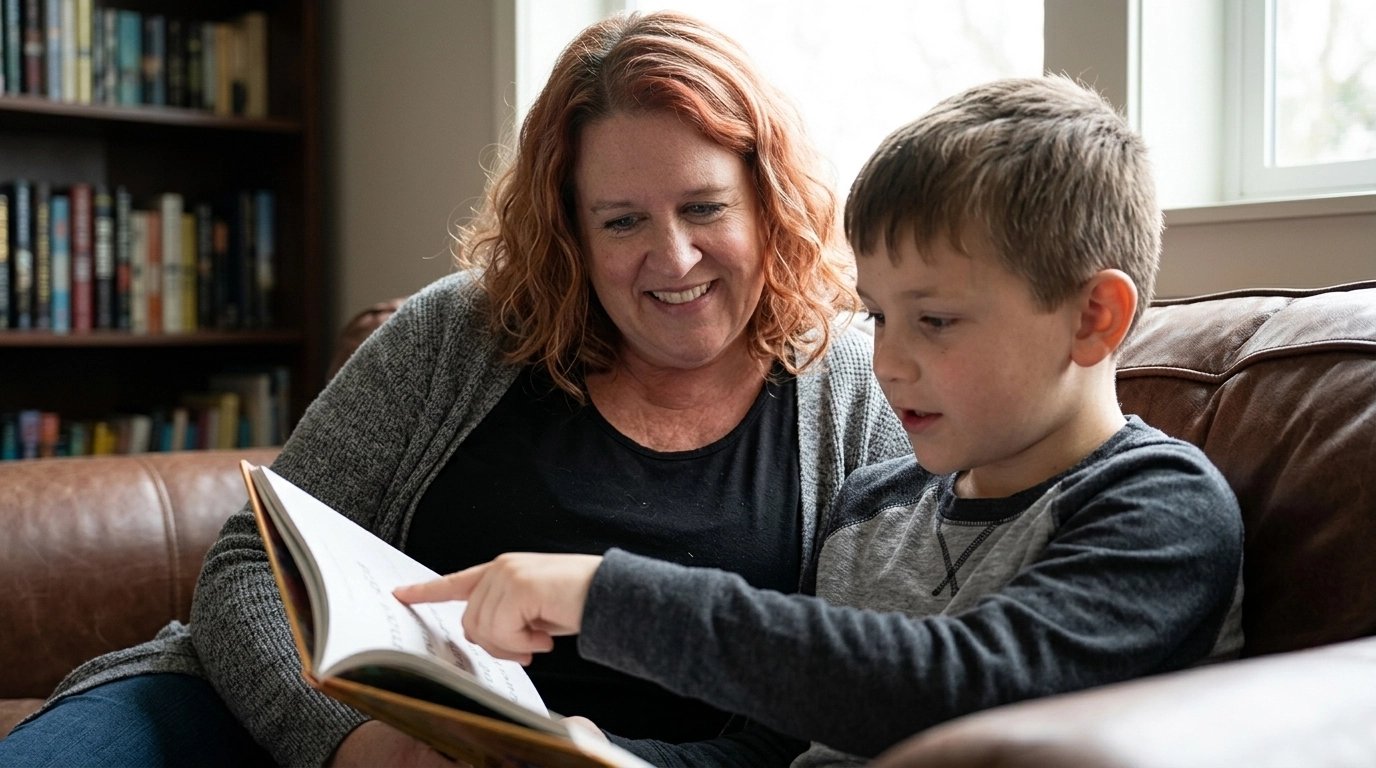
For many parents in Gresham and East Portland, the journey of teaching a child to read feels like a clear, straight path: until it suddenly isn’t. You might notice your bright, creative child start to hesitate before opening a book. Perhaps they’ve started "guessing" words based on the pictures, or they’ve begun to avoid reading altogether. If this sounds familiar, you aren’t alone. Many families in our community are discovering that the traditional way reading is often taught in schools: frequently called "Balanced Literacy": isn't providing the solid foundation their children need.
Instead, more and more families are seeking out a structured literacy reading tutor in Gresham to bridge the gap. At North Star Tutoring, LLC, we’ve seen firsthand how switching from a "guessing-based" approach to an evidence-based, multisensory method can turn a struggling student into a confident reader. That shift is not just a preference issue. It is strongly supported by reading science. Large reviews of research have found that systematic, explicit phonics instruction improves reading outcomes more than non-systematic or incidental phonics instruction, especially in kindergarten, first grade, and for children at risk for reading difficulties (National Reading Panel [NRP], 2000). The International Dyslexia Association also states that Structured Literacy is the most effective approach for students with dyslexia and related reading difficulties because it is explicit, systematic, cumulative, and diagnostic (IDA, 2019).
In this post, we’ll explore the fundamental differences between Balanced Literacy and Structured Literacy, and why making the switch is often the key to moving from striving to thriving.
The Balanced Literacy Mystery: Why "Guessing" Isn't Reading
For years, "Balanced Literacy" has been the standard in many elementary classrooms. The idea sounds lovely: surround children with beautiful books, encourage a love of stories, and "balance" some phonics with other strategies. However, for a struggling reader or a student with dyslexia, this balance is often tipped too far away from the mechanics of the language.
One of the most common techniques associated with Balanced Literacy is the "three-cueing system." Students are taught to look at the first letter of a word, look at the picture, and think about what word would "make sense" in the sentence. While this might help a child get through a simple picture book, it doesn't teach them how to actually read the word.
That matters because skilled reading depends on accurate word recognition that becomes stored in memory through connections among phonemes, graphemes, and meaning: a process often described as orthographic mapping (Kilpatrick, 2015). In other words, readers learn words by connecting the sounds in spoken language to the spellings in written language, not by repeatedly guessing from context. Context can support comprehension, but it is not a reliable substitute for decoding.
This is one of the biggest scientific criticisms of three-cueing. When children are prompted to guess from pictures or sentence context, attention is pulled away from the print itself. Researchers and reading experts have increasingly argued that these habits are inconsistent with how word recognition develops in the brain and with what we know about efficient reading acquisition (Moats, 2020; Seidenberg, 2017). Put simply: good readers do not primarily read by guessing; they read by rapidly recognizing words they can decode.
When the pictures disappear in later grades, these students often hit a "third-grade wall" where their guessing strategies no longer work. This is where a Gresham reading tutor for struggling readers becomes essential. We move away from cues and toward the actual code of the English language.
What is Structured Literacy?
Structured Literacy is the gold standard for reading instruction, particularly for those who find reading difficult. Unlike Balanced Literacy, which assumes children will "pick up" reading if they are exposed to enough books, Structured Literacy is direct and explicit.
This means nothing is left to chance. We teach the relationship between sounds (phonemes) and letters (graphemes) in a deliberate, step-by-step sequence. We don't just hope they notice that 'sh' makes a certain sound; we teach it, practice it, and master it before moving on. This approach aligns with the research base summarized by the National Reading Panel, which found that systematic phonics instruction produces significant benefits in word reading, spelling, and reading outcomes, especially for beginning readers and students experiencing reading difficulty (NRP, 2000).

As an evidence-based reading tutor for elementary students, I focus on the two sides of the same coin: decoding (reading words) and encoding (spelling words). When a child understands the underlying structure of the language, they no longer have to guess. They have the tools to tackle any word on the page.
Structured Literacy is also built around features that matter in real learning: explicit teaching, systematic scope and sequence, cumulative review, diagnostic teaching, and often multisensory practice. The International Dyslexia Association describes effective instruction for students with dyslexia as systematic, cumulative, explicit, and multisensory, with direct teaching of phonology, sound-symbol association, syllables, morphology, syntax, and semantics (IDA, 2014; IDA, 2019).
The Benefits of a Structured Approach:
Systematic and Cumulative: Lessons build on one another, moving from simple sounds to complex patterns. This kind of sequencing supports mastery and reduces cognitive overload.
Diagnostic: I constantly assess the student's progress to ensure they have mastered a concept before moving forward.
Explicit: Rules and patterns are taught clearly, leaving no room for confusion.
Grounded in how the brain learns words: Repeated decoding and spelling practice supports orthographic mapping, helping words become stored for fast, automatic retrieval (Kilpatrick, 2015).
Why Gresham Families are Choosing a Different Path
Living in the beautiful East Portland area, from the neighborhoods near the Persimmon Golf Course to the heart of Gresham, parents are becoming savvy consumers of education. They are looking for results backed by science.
The "Science of Reading" has shown us that the human brain isn't naturally wired to read in the same way it is wired to speak. Reading is a code that must be broken. That is why explicit instruction matters so much. Decades of converging evidence from cognitive science, education research, and dyslexia organizations support teaching children to read through phonemic awareness, explicit phonics, connected-text practice, vocabulary, language comprehension, and writing, rather than asking them to infer the system on their own (NRP, 2000; Moats, 2020).
For a dyslexia reading intervention tutor in Gresham, Oregon, utilizing Orton-Gillingham-informed principles means prioritizing direct and explicit instruction in decoding and encoding, delivered in a systematic, cumulative way. It is important to be accurate here: the broader evidence base is strongest for the features of Structured Literacy: explicit phonics, careful sequencing, cumulative review, and diagnostic teaching. Dyslexia experts consistently recommend those features for students with dyslexia (IDA, 2019), and they are the same features we build into our instruction at North Star Tutoring.
Multisensory instruction also has a practical role. When students say sounds, trace letter patterns, manipulate tiles, and write what they decode, they get more opportunities to connect speech, print, and movement. The International Dyslexia Association identifies this coordinated visual, auditory, and kinesthetic-tactile practice as an important feature of effective dyslexia instruction, especially when it is paired with systematic and explicit teaching rather than used as a stand-alone activity (IDA, 2014).

The North Star Tutoring Difference: Expert-Led Support
When you’re looking for a multisensory reading tutor for reluctant readers, you want more than just a homework helper. You want a partner in your child's educational journey.
At North Star Tutoring, LLC, our instruction is led by an experienced educator with a Master’s degree in Reading Education. I bring specialized LETRS training and UFLI qualifications to every session. This level of expertise ensures that your child isn't just "practicing" reading; they are receiving instruction tailored to how their specific brain learns.
Our Unique Approach Includes:
Multi-sensory, Hands-on Learning: We use tiles, sand trays, and movement to make abstract concepts concrete. This is especially vital for students who have felt frustrated by traditional "sit and listen" methods. The goal is not "learning styles." The goal is reinforced learning through multiple pathways while still keeping instruction explicit and tied to print-sound connections (IDA, 2014).
One-on-One Focused Instruction: Every child is unique. By providing personalized attention, I can give immediate feedback and coaching, preventing the frustration that comes with repeated mistakes.
A Supportive Environment: We believe that the emotional side of reading is just as important as the academic side. We celebrate every small win, building the self-esteem that struggling readers often lose.
Beyond Phonics: Fluency and Comprehension
While breaking the code is the first step, our goal is to help your child become a fluent reader who actually understands and enjoys what they read. As a structured literacy reading tutor in Gresham, I don't stop at decoding. We work on:
Reading Fluency: Helping students move from choppy, word-by-word reading to smooth, expressive reading.
Vocabulary Development: Building a "word bank" that allows them to understand complex texts.
Comprehension Strategies: Teaching students how to think about what they are reading, making connections, and visualizing the story.
This holistic approach is why so many families trust us to guide their children. Whether you have a preschooler just starting out or an older student struggling with complex academic texts, our evidence-based methods work.
Starting Your Journey Today
If you’ve been searching for an Orton-Gillingham reading tutor near Persimmon Golf Course or anywhere in the Gresham area, I invite you to take the first step. You don't have to navigate this journey alone.
Reading should be a source of joy and discovery, not a source of evening arguments and tears. By switching to a structured literacy approach, you are giving your child a gift that will last a lifetime: the gift of literacy.
And if you’re wondering whether this science-based approach is only for children with diagnosed dyslexia, the research says no. Explicit, systematic phonics benefits a wide range of learners, with especially strong effects for children at risk for reading problems and those already experiencing difficulty (NRP, 2000). In other words, teaching the code clearly helps struggling readers, but it also helps prevent many students from falling behind in the first place.
Let me help you turn that frustration into a breakthrough. Together, we can create a supportive environment where your child feels safe to take risks, learn from mistakes, and ultimately, succeed.
References
International Dyslexia Association. (2014). Parent’s Guide to Effective Instruction Fact Sheet. https://dyslexiaida.org/parents-guide-to-effective-instruction/
International Dyslexia Association. (2019). Structured Literacy: Effective Instruction for Students with Dyslexia and Related Reading Difficulties. https://dyslexiaida.org/structured-literacy-effective-instruction-for-students-with-dyslexia-and-related-reading-difficulties/
Kilpatrick, D. A. (2015). Essentials of Assessing, Preventing, and Overcoming Reading Difficulties. Wiley.
Moats, L. C. (2020). Teaching Reading Is Rocket Science. American Federation of Teachers. https://www.aft.org/sites/default/files/moats.pdf
National Institute of Child Health and Human Development. (2000). Report of the National Reading Panel: Teaching Children to Read. https://www.nichd.nih.gov/sites/default/files/publications/pubs/nrp/documents/report.pdf
Seidenberg, M. (2017). Language at the Speed of Sight: How We Read, Why So Many Can’t, and What Can Be Done About It. Basic Books.
Ready to boost your child's reading skills? Contact North Star Tutoring, LLC today to schedule a consultation and see how our personalized, one-on-one instruction can make a difference for your family. Whether you are looking for an in-person tutor in Gresham or an online structured literacy tutor for dyslexia, we are here to guide the way.
Visit our testimonials page to hear from other Gresham families who have seen their children thrive with our support. Let’s start this journey together.
Comments