The Ultimate Guide to Orton-Gillingham: How Structured Literacy Helps Struggling Readers in East Portland Succeed
- North Star Tutor Team
- 1 day ago
- 5 min read
For many families in East Portland and Gresham, watching a child struggle with reading can be a heartbreaking experience. You see their bright minds, their creativity, and their potential, yet the simple act of decoding a sentence feels like an insurmountable mountain. If your child is working through these challenges, you are likely looking for more than just a "quick fix": you are looking for a path toward permanent, confident literacy.
At North Star Tutoring, LLC, we understand that reading is not an intuitive skill for every brain. For children with dyslexia or other decoding difficulties, traditional classroom methods often fall short because they assume a level of phonological processing that isn't naturally present.
This is where the Orton-Gillingham (OG) approach becomes a literal game-changer. As a structured literacy reading tutor in Gresham, I specialize in this evidence-based methodology that doesn't just teach reading: it rewires the brain for success.
What is the Orton-Gillingham Approach?
The Orton-Gillingham approach is not a "program" you buy off a shelf; it is a philosophy of instruction developed in the early 20th century by neuropsychiatrist Dr. Samuel T. Orton and educator Anna Gillingham.
Unlike standard "whole language" or "balanced literacy" methods: which often rely on guessing from context or pictures: OG is direct and explicit. It breaks reading and spelling down into their smallest parts (phonemes and graphemes) and teaches them in a logic-based sequence.
For parents seeking an Orton-Gillingham reading tutor near Persimmon Golf Course, this means your child isn't just memorizing sight words. They are learning the "why" behind the English language, giving them the tools to attack any word they encounter.
The Multisensory Advantage: Engaging the Whole Brain
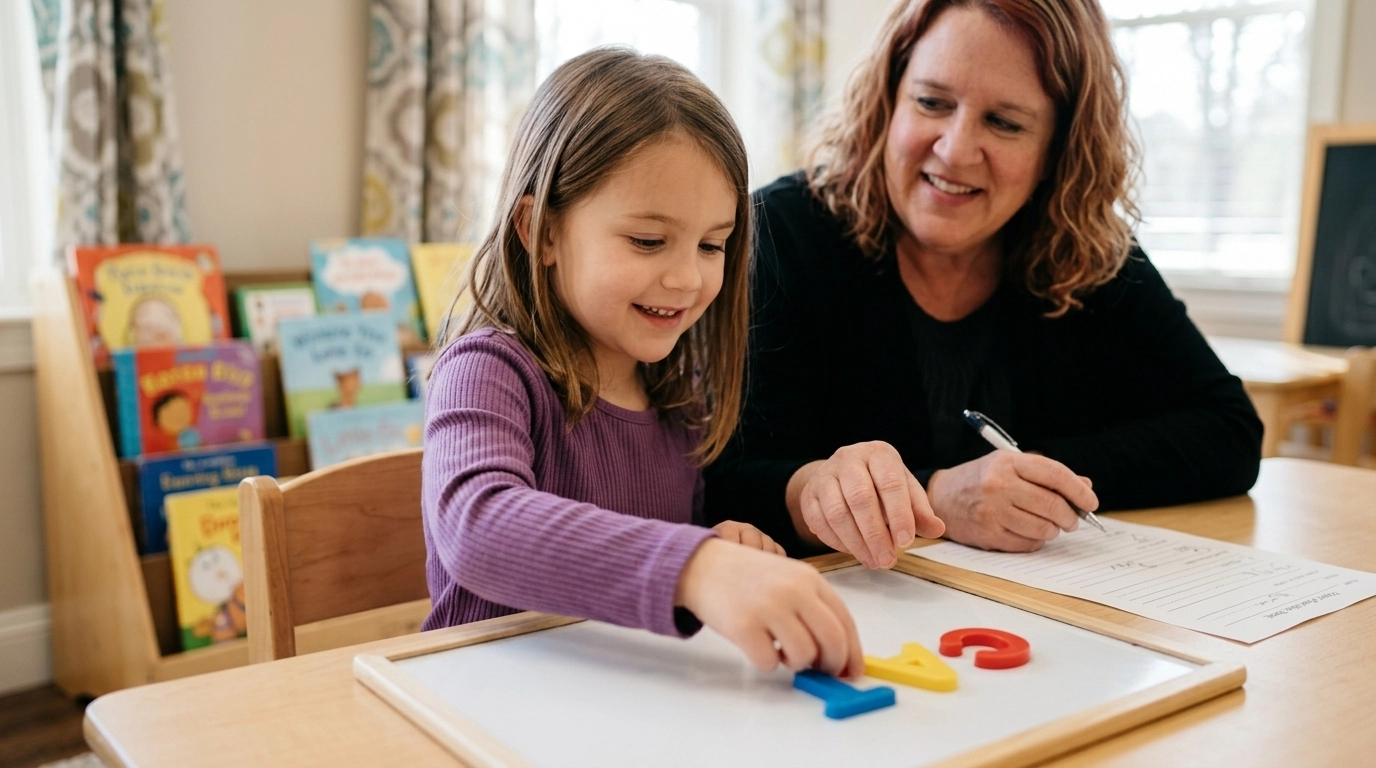
One of the most distinctive features of the OG approach is its multisensory nature. We often refer to this as the VAKT method: Visual, Auditory, and Kinesthetic-Tactile.
1. Visual (See It)
Students look at letters, patterns, and words. We use color-coding to distinguish between vowels and consonants, or to highlight specific suffixes and prefixes.
2. Auditory (Hear It)
Instruction involves constant listening and speaking. Students hear a sound, say the sound, and identify its position in a word.
3. Kinesthetic-Tactile (Feel It)
This is where the magic happens for many struggling readers. Students don't just write letters; they engage their muscles. This might involve "air writing" with large arm movements or tracing letters in sand or on textured surfaces.
Why this matters: Research shows that when we engage multiple senses simultaneously, we create more "hooks" for the information to latch onto in the brain (International Dyslexia Association, 2023). If a child has a weakness in auditory processing, their visual or tactile memory can help bridge the gap.

The Science of the Brain: Rewiring for Reading
It is a common misconception that dyslexia is a visual problem or a matter of "seeing letters backward." In reality, dyslexia is a neurological difference in how the brain processes language.
Strengthening White Matter Pathways
Modern neuroimaging has provided incredible insights into why the OG approach is so effective. Studies have documented actual growth in the white matter tracts of the reading network following intensive, structured literacy tutoring (Shaywitz & Shaywitz, 2020).
By providing direct and explicit instruction in phonics, we are physically strengthening the pathways that connect the part of the brain responsible for recognizing letters (the visual word form area) with the parts responsible for processing sounds and meaning.
The Role of Neuroplasticity
The brain is remarkably plastic, meaning it can change and adapt. However, for a reading tutor for children with decoding difficulties, the goal isn't to "cure" dyslexia: it is to build "compensatory pathways."
Systematic, cumulative instruction ensures that each new skill is built upon a rock-solid foundation. This reduces the cognitive load on the student, allowing them to move from slow, painful decoding to automatic, fluent reading.
Why Systematic and Cumulative Instruction is Vital
Traditional tutoring often jumps around, focusing on whatever homework the child brought home that day. In the Orton-Gillingham approach, instruction is systematic and cumulative.
Systematic: We follow a logical order of the English language, starting with the most basic, consistent sounds and moving toward complex Greek and Latin roots.
Cumulative: Each lesson begins with a review of what has already been learned. We never move on to a new concept until the previous one is mastered.
This "no-gaps" approach is essential for children who struggle with memory or processing. It builds confidence because the student is never asked to do something they haven't been explicitly taught how to do.

History and Efficacy: Does It Really Work?
When Dr. Orton first began his research in the 1920s, he noticed that children who struggled with reading often had high intelligence but poor "phonological awareness." He teamed up with Anna Gillingham to create a method that combined his neurological findings with her pedagogical expertise.
Decades of Evidence
Today, the National Reading Panel (2000) and countless subsequent studies have confirmed that "systematic phonics instruction" is the most effective way to teach reading, particularly for those at risk of reading failure.
While "balanced literacy" (which became popular in many schools in the 1990s and 2000s) works for some naturally gifted readers, it leaves many others behind. The Orton-Gillingham approach, by contrast, is known as "essential for some, but beneficial for all."
Supporting Your Child’s Journey in East Portland
As a parent, you are the ultimate advocate for your child. Choosing a structured literacy reading tutor in Gresham means choosing a partner who understands the emotional weight of this journey.
At North Star Tutoring, LLC, our sessions are led by an experienced educator with a Master’s degree in Reading Education and specialized training in LETRS and UFLI. We don't just look at the data; we look at the child. We celebrate the "joy" of that first successfully decoded multi-syllabic word and provide a supportive environment where it is safe to make mistakes.
"The instruction is tailored to each learner's specific needs, allowing for immediate feedback and coaching."
Whether your child is a preschooler just starting to recognize letters or an older student struggling with complex high school texts, the principles of Orton-Gillingham remain the same: provide the roadmap, engage the senses, and support the brain.
Transforming Striving to Thriving
Reading is the foundation for almost all other academic success. When a child masters decoding, their world expands. They go from being a "struggling reader" to a student who can explore history, science, and literature with confidence.
If you are looking for an Orton-Gillingham reading tutor near Persimmon Golf Course, I invite you to reach out. Let’s discuss how we can create a personalized plan to help your child navigate their reading journey.
Ready to start the journey? Learn more about our services or read what other families are saying.
References and Further Reading
International Dyslexia Association (2023).Structured Literacy: An Introductory Guide. [IDA Resources]
National Reading Panel (2000).Teaching Children to Read: An Evidence-Based Assessment of the Scientific Research Literature on Reading and Its Implications for Reading Instruction. National Institute of Child Health and Human Development.
Shaywitz, S. E., & Shaywitz, J. (2020).Overcoming Dyslexia (Second Edition). Alfred A. Knopf.
Gaab, N. (2017).The Neural Systems of Reading and Dyslexia. Boston Children's Hospital/Harvard Medical School Research Brief.